

Welcome to Orchid Obsession
Boutique orchid nursery in Wellington, New Zealand
We bring exquisite orchids from around our planet to your home. Our collection includes rare and classic varieties such as Phalaenopsis. Dendrobiums, Cattleyas and Paphiopedilums. All grown with care and shipped NZ-wide. Whether you're a seasoned grower or just starting out, our orchids are perfect for collectors, hobbyists, and gift-givers alike.
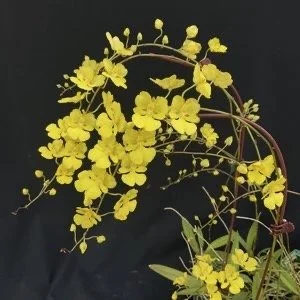
A miniature species from Panama to Peru, Zelenkoa onusta produces arching sprays of 8–14 pure cadmium yellow flowers per spike — and well-grown plants can push up dozens of spikes simultaneously — making it an impressive show. The only member of the monotypic genus Zelenkoa, it is famously known for growing on cacti in its native semi-arid coastal habitat, where its roots can penetrate cactus tissue to extract moisture during the long dry season.
Warm to hot growing, this species grows best in bright light and strong air movement year-round; mount on cork bark or tree fern to replicate its natural habitat, water freely in the growing season, and reduce watering significantly over winter to provide the dry rest it needs to trigger flowering.
Health established seedlings, 5 months out of flask.
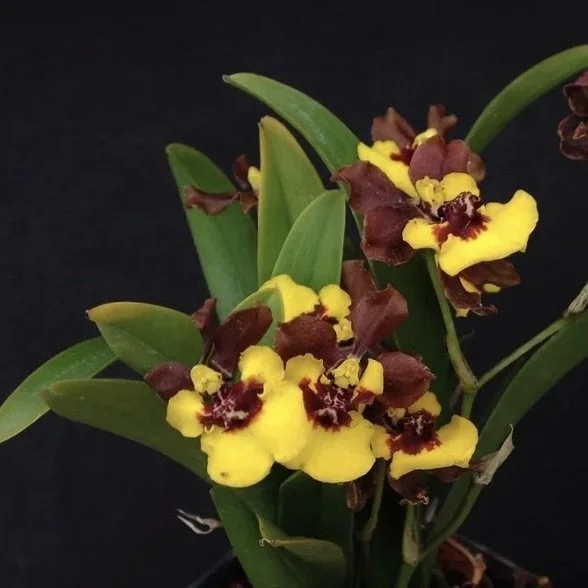
A compact miniature species from the coastal Atlantic forests and Organ Mountains of Brazil, where it grows as an epiphyte at low to mid elevations. Fragrant spring flowers reach 4.5 cm across, with rich copper-bronze sepals and petals framing a vivid golden-yellow lip splashed with a ruby-red crest — a striking contrast that earned this species its name, after Croesus, the famously wealthy king of Lydia.
Grows best in cool to intermediate conditions with medium-bright filtered light and strong air movement. Water freely during the growing season, reducing watering over winter as pseudobulbs mature to encourage flowering. Does particularly well mounted on tree-fern slabs or in hanging baskets;
Health established seedlings, 8 months out of flask.
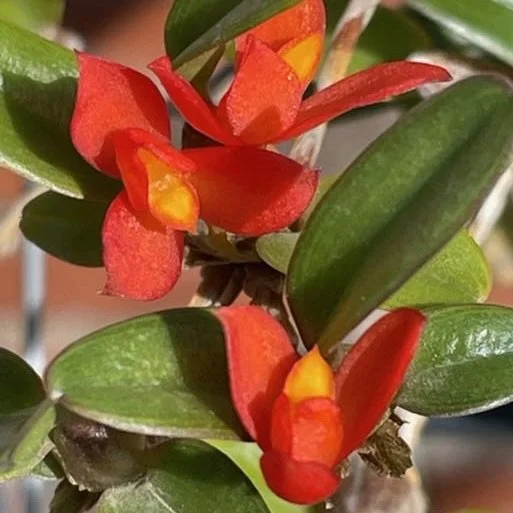
A delightful, compact Maxillaria species from the cloud forests of Venezuela and Colombia. Produces vivid orange to red flowers that are long-lasting and disproportionately large for a miniature-sized plant.
Grows best in intermediate to cool conditions, with constant moisture and bright light. Also does well mounted on a tree fern slab.
Division from private collection.
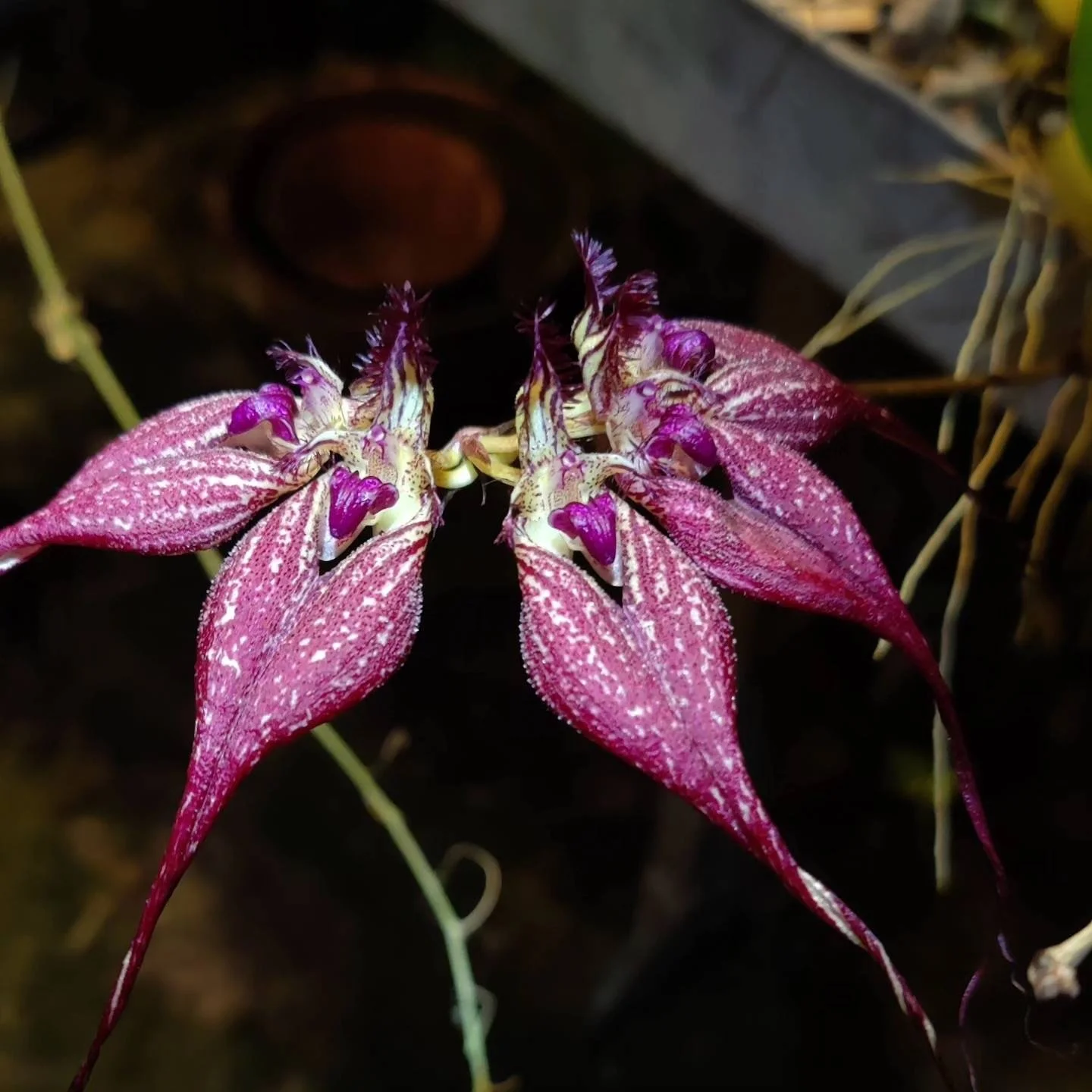
Native to the eastern Himalayas —including Northeast India, Myanmar, and southern China.. This small-sized species produces striking creamy yellow flowers heavily overlaid with dark burgundy or raspberry-red spots in fan-shaped umbels at the end of erect stalks. This cross uses the awarded cultivar ‘Red Chimney’ distinguished by its larger flowers and intense deep-red flowers.
It grows best in intermediate to warm conditions, shade, high humidity and needs constant moisture around its roots (they don't like to dry out). Like most bulbophyllums, it has a short root system so does well growing on a tree-fern slab, basket or in a shallow saucer.
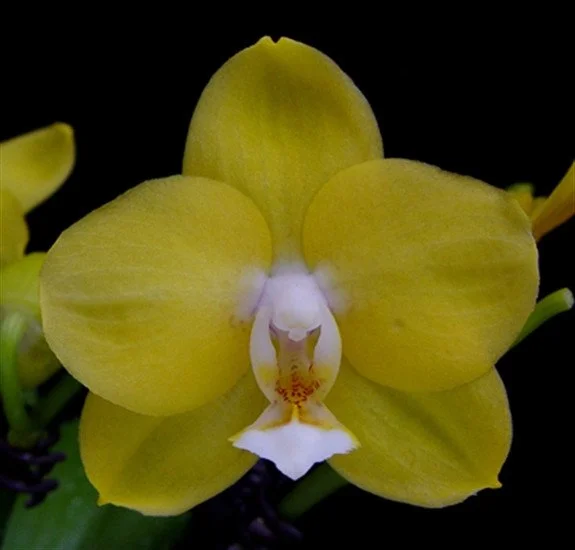
Beautiful clear yellow flowers held neatly above foliage on small, compact plants.
Grows best in intermediate to warm conditions, medium humidity, light/medium shade and good air movement. Plants should be kept moist all year, watering to keep the roots damp but not soggy.
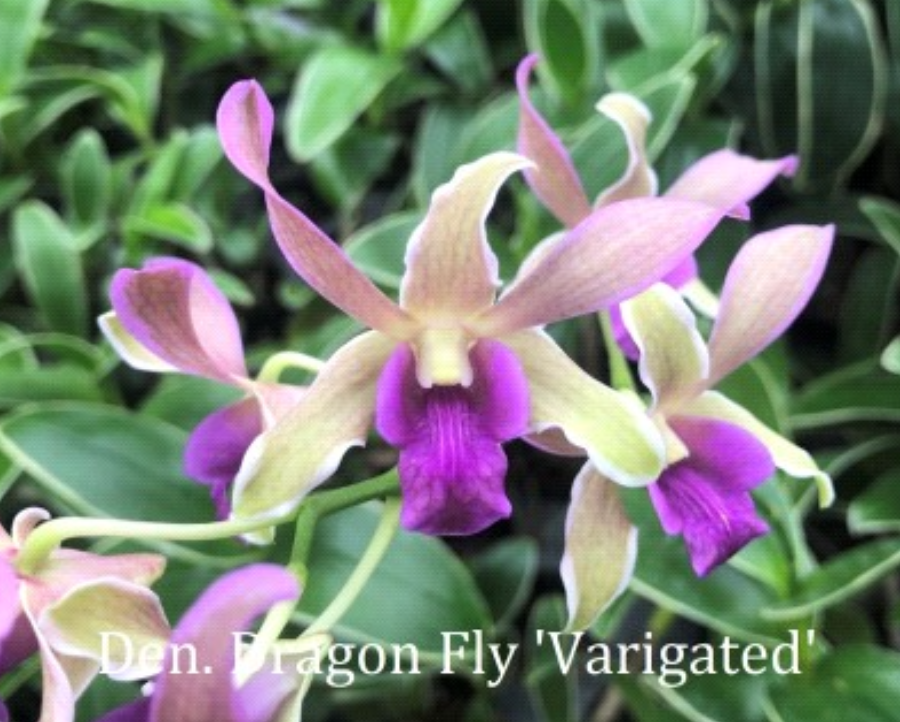
An attractive Dendrobium hybrid often grown for its distinctive cream‑green variegated foliage that remains attractive year round. Produces delicate, star‑shaped flowers in soft shades of pink to mauve, with a contrasting darker lip.
Grows best in intermediate to warm conditions and bright filtered light. Water generously during active growth, allowing slight drying between watering.
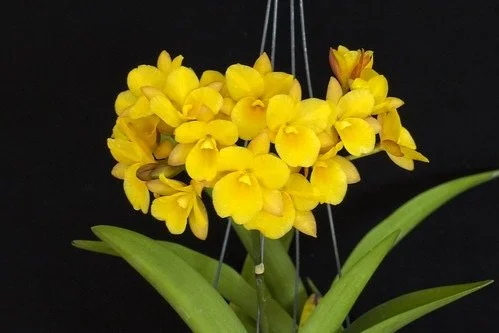
A stunning yellow form of the popular Guaritonia Why Not (syn. Cattleytonia Why Not), which is typically red. The cultivar ‘Makana ke Akua’ produces vibrant clusters of butter-yellow blooms accented with orange-tinged sepals. This easy-to-grow orchid will often flowers twice a year,
Grows best in intermediate conditions and bright light with good air movement and medium humidity.
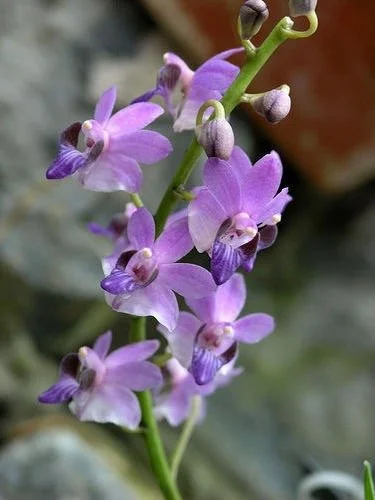
This delightful miniature Phalaenopsis is a primary cross between Phal. pulcherrima var. coerulea and Phal. finleyi Flowers from the cross are often a unique fuchsia or purple striped colouring.
Grows best in intermediate to warm conditions, medium humidity, light/medium shade and good air movement. Plants should be kept moist all year, watering to keep the roots damp but not soggy.

Also known as the cockleshell or clamshell orchid, Prosthechea cochleata is sought after for its unusual, upside-down flowers with a purple-striped lip facing upwards and other flower parts hanging down. The long-lasting flowers open successively on the flower stem, providing months of continuous blooming.
This species grows best in cool to intermediate conditions, moderate light, and benefits from a winter rest. Very easy to grow and flower, Prosthechea cochleata will also thrive on a windowsill indoors.
Featured: Compact orchids

The orchid is one of those plants that inspires passion and obsession
John Newton
What our customers are saying
-
“Fantastic service. Plants arrived safe and well packaged. Looking forward to seeing this one flower in the future. A++” Clinton from TradeMe
-
“Fantastic orchids, super fast delivery. Thank you. Highly recommend orchidobsession!” Patrise from TradeMe
-
“[My] Orchid arrived yesterday safely, thanks so much it is such a healthy plant. I have purchased plants from an Auckland grower that are so tiny about quarter the size of yours so I appreciate that you sell such healthy plants.” Pam from TradeMe
-
“Stunning specimens and excellent service. Can’t recommend highly enough” Nikolas from TradeMe
A compact species from tropical western and central Africa. Produces pendant sprays of long-lasting, white star-shaped flowers with a hint of pink on the spurs and a sweet gardenia-like fragrance. The name biloba refers to the two-lobed tips of the dark-green, leathery leaves.
Grows best in intermediate to warm conditions and bright indirect light. Water regularly throughout the year, allowing the roots to dry out slightly between watering. Will also grow well mounted on tree fern or similar.